Custom RGB Mouse Pads: Lighting Specs Brands Should Confirm
When a gaming brand orders a custom RGB mouse pad, the artwork gets all the attention and the lighting gets a one-line spec. That is backwards. The printed surface is the cheapest part of the project to redo; the light system decides how the product looks in a dark room, how it photographs on a product page, and whether five thousand units behave the same way or drift into five thousand slightly different colors.
This guide lists the lighting specifications our engineers ask brands to confirm before a custom RGB order enters production. It is written for gaming brands, e-commerce sellers, and promotional distributors who want their color identity reproduced on the edge of the pad as accurately as it is reproduced on the surface.
Key takeaways before you read further:
- Light source: confirm whether the border uses fiber optic light guides or exposed LED beads, because the choice controls uniformity, glare, and how the pad photographs.
- Color behavior: list every mode, the default effect at first power-up, and whether the control chip restores the last setting on reconnect.
- Brand color match: a hex code on screen and a lit edge in a dark room are different environments; approve a lit sample, not a rendering.
- Order terms: Quantidade mínima (Minimum Order Quantity) 100 pcs on existing smart molds, 10 to 15 day OEM lead time, 1.5 million pads monthly capacity.
Why Lighting Specs Decide Custom Outcomes
A stock RGB pad succeeds or fails on the same criteria as any consumer electronic: it works or it does not. A custom RGB pad carries an extra burden, because the brand’s identity is now part of the electrical behavior. If the requested cyan reads as blue on the production unit, the product launch photographs wrong, the packaging render no longer matches the unboxing video, and the customer service team spends the season explaining the difference.
Customization also multiplies the failure surface. Changing the pad size changes the length of the light path; changing the surface material changes how much light bleeds through the top layer; moving the logo changes where the USB cable exits. Each of those decisions interacts with the lighting, which is why our OEM and ODM process routes custom RGB projects through a specification review with the electronics team, not just the print team.
The commercial stakes are real. Illuminated SKUs sit in the margin layer of a gaming catalog, above the plain pads that compete on price in our wholesale blank program. A brand that nails its lighting spec defends a premium listing; a brand that leaves the spec vague spends its margin on returns and rework. For background on the category economics, our earlier guide on what brands should check before ordering RGB mouse pads covers the wider checklist.
Light Guide Type And Brightness Uniformity
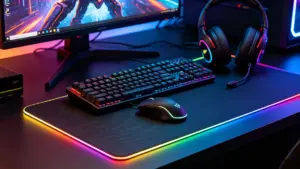
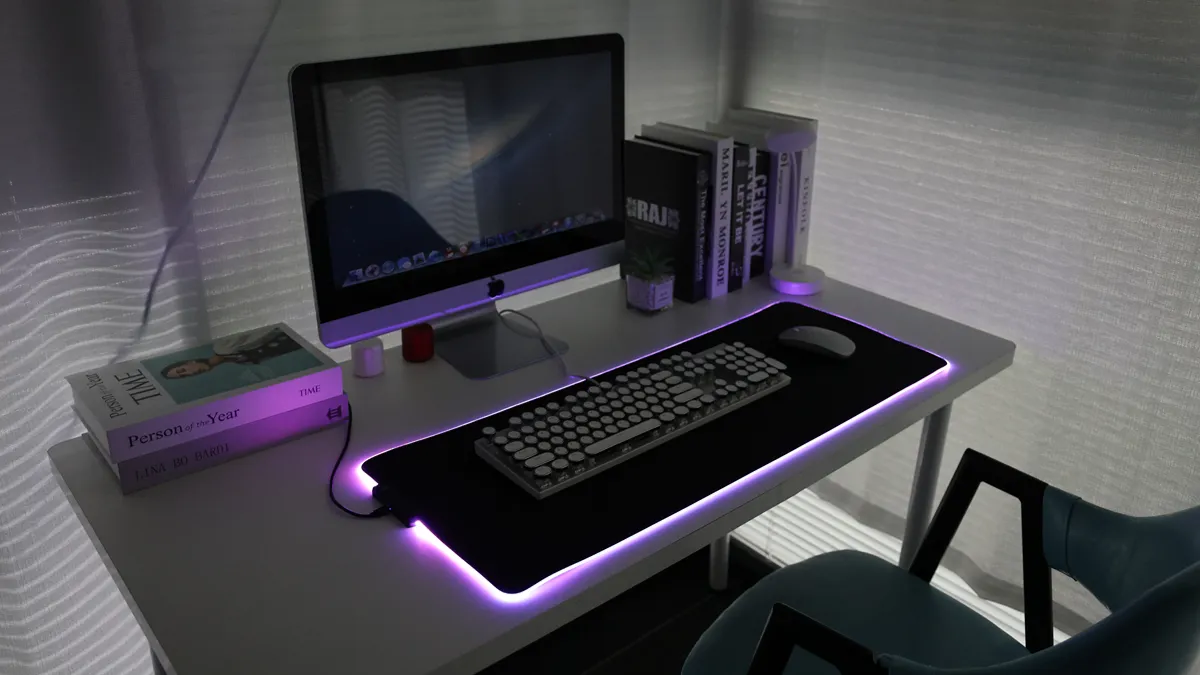
The first specification to confirm is physical: what carries the light around the border. Sanxing builds custom borders with high-transmittance fiber optic light guides, which take the output from the LED source and distribute it along the full perimeter. The visible result is a continuous band of color with no dark zone at the far corner, which is the defect that separates a premium listing photo from a marketplace refund.
Exposed LED bead strings behave differently. Individual beads read as points of light, show brightness falloff along the strip, and produce glare that a camera exaggerates. Some designs use them deliberately for a dotted effect, but a brand that asked for an even glow and receives a string of dots has a specification gap, not a quality problem. Name the construction in the purchase specification and the sample review becomes a five-minute confirmation instead of a debate.
Review the sample in the environment your customer owns: a dark room, at eye level, from two meters away. That is the room your product page promises.
Uniformity is measurable, so make it measurable in the specification. Ask the factory how brightness is checked at both ends of the border, request a full-pad photo of the lit sample in a dark room, and repeat the check on the golden sample before mass production. A factory that runs these checks in-house answers with documents; a factory that has never run them answers with adjectives.
Size interacts with uniformity more than buyers expect. A 900 x 400 mm extended pad pushes light along a longer path than a standard pad, and larger custom sizes in the range covered by our standard gaming mouse pad sizes guide may need a second light source or a brighter output grade to hold the same even band. Lock the size first, then approve the lighting for that exact size, never the other way around.
Color Modes, Control Chip, And Mode Memory
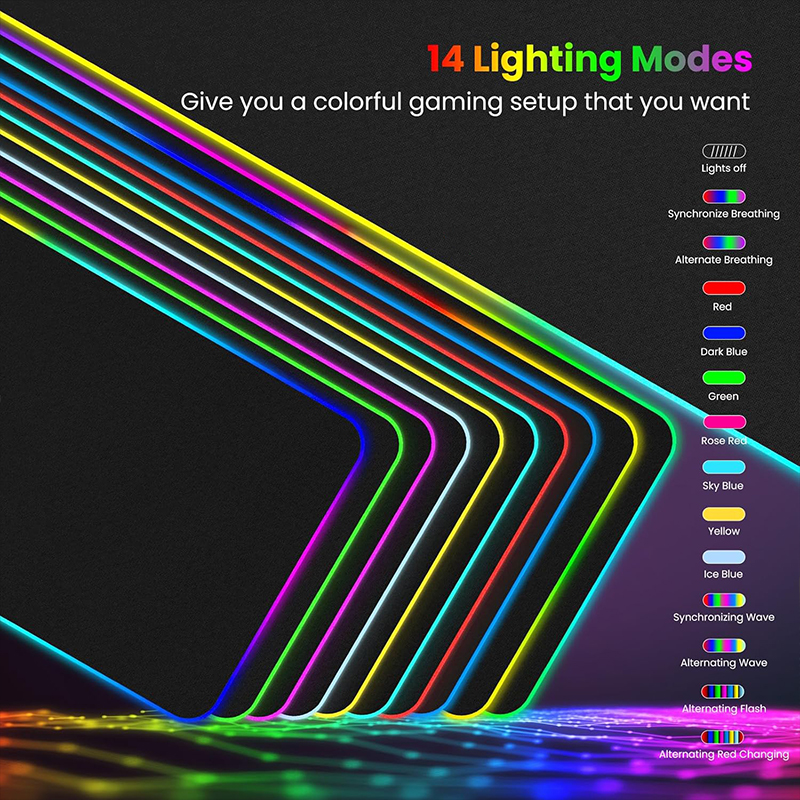
The control electronics decide what the pad does after the first impression. Our smart chip runs a defined mode set: static color lock for brand-matched setups, breathing effects, and cycling patterns, with a memory function that restores the user’s last color and brightness on every power-up. For a custom order, the brand should receive and approve the complete mode list, because every mode on the chip ships to every customer whether the marketing plan mentions it or not.
Mode memory deserves its own line in the specification. Test it directly on the sample: unplug the pad and reconnect it five times. A pad that returns to the same color and brightness each cycle has working memory; a pad that resets to a default effect will generate support tickets that read as defects. The unplug test costs two minutes and predicts a season of reviews.
Brands that market specific colors should also confirm how the requested shade renders in each mode. A static lock at full brightness and the same hue inside a slow breathing cycle land on the eye differently, and reviewers notice. Put the approved mode list, the default power-up state, and the memory behavior into the purchase contract, and the factory has a document to build against rather than a mood board.
| Lighting Spec Item | What The Factory Should Confirm |
|---|---|
| Light source | Fiber optic light guide or LED bead string, named in writing |
| Mode list | Every shipping mode, approved by the brand before production |
| Default state | Effect and brightness at first power-up out of the box |
| Mode memory | Last setting restored on reconnect, verified by power-cycle test |
| Uniformity proof | Dark-room photo of the full pad lit edge to edge, repeated on the golden sample |
Marketing claims tied to the light system should follow the same discipline. The United States Federal Trade Commission enforces substantiation standards for product performance claims, and lighting effects are a performance claim like any other. Build the claim from the approved specification, not from the rendering.
Have a custom RGB project with brand colors to match? Send your artwork, target size, and mode requirements. Our engineers confirm feasibility and return a quotation within one working day.
Quantidade mínima 100 pcs | RoHS and CE certified | DDP to Amazon FBA
Branding Surface And Print Placement
The printed surface and the light border share one edge, and that is where custom projects collide. A logo that runs to the very border will sit next to the light band, and light bleed through a light-colored print can wash the design out at night while it looks perfect in the daytime studio shot. Give the print layout a defined standoff distance from the border and test both states: lights off under office lighting, and lights on in a dark room.
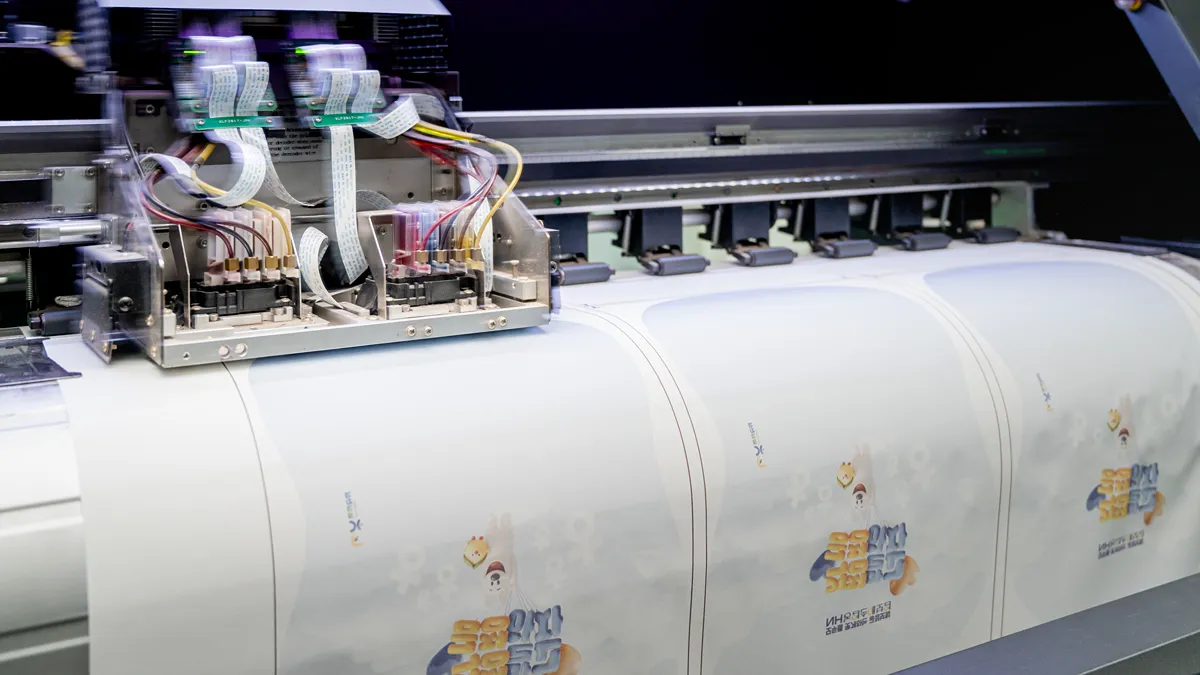
Print method matters as much as layout. Our digital printing line reproduces gradient artwork and photographic detail on cloth surfaces, and the print survives the heating and bonding stages that follow it. Ask for a printed proof on the actual production material, not on paper, because ink behaves differently on fabric weave than on a coated sheet. Our guide on custom packaging and logo printing covers the branding options that sit outside the pad itself.
For promotional distributors, the same rules apply with a calendar attached. A lit pad with the client’s logo is a premium tier item in a corporate gifting catalog, and the lighting spec review is what keeps the reorder identical to the first run. Keep the approved spec sheet with the contract and the second order ships without a new round of sampling.
Edge Sealing, Waterproofing, And Durability
Lighting adds an electrical weakness that a plain pad does not have: liquid reaching the light module. Sanxing seals custom borders with precision encapsulated stitching, which keeps the perimeter waterproof and leak-free when a drink lands on the desk, the most common accident a pad faces. The seal is also what stops dust and sweat from working into the light channel over months of use, so a pad that starts bright stays bright.
Durability testing on a custom order should include the cable exit, because that is the highest-stress point on the assembly. Confirm the strain relief design in the specification, then flex the cable at the pad edge on the sample a hundred times. Combined with a spill test on the sealed edge, those two checks cover the majority of field failures this category sees.
The certified RGB product family carries RoHS (Restriction of Hazardous Substances) and CE conformity, with FCC, CA65, and REACH documentation across the line, so a custom order inherits a compliance path that already exists rather than starting a certification project from zero. Buyers adding illuminated SKUs to a gaming assortment can review the electronics integration behind the range on our smart tech pads page before they shortlist a vendor.
Frequently Asked Questions
Can You Match Our Exact Brand Color On The Light Border?
We build custom orders to an approved lit sample rather than a screen value, because a hex code and a glowing edge render in different environments. Send your color reference with the artwork, and we produce a lit physical sample for approval before mass production.
What Is The MOQ For Custom RGB Mouse Pads?
Custom branding on existing smart molds starts at 100 pcs, including custom artwork on the surface. Fully custom shapes or new border designs are quoted individually after a feasibility review of your drawings.
Do Custom Pads Keep The Mode Memory Function?
Sim. The smart chip supports static color lock, breathing modes, and a memory function that restores the last setting on power-up. Custom orders approve the mode list and default state before production, and the behavior is verified on the golden sample.
Will Light Bleed Affect Our Printed Logo?
Light-colored artwork placed against the border can pick up bleed in a dark room. We set a standoff distance between the print area and the light band during layout review, then confirm both states, lights off and lights on, on the printed sample.
How Long Does A Custom RGB Order Take?
OEM lead time runs 10 to 15 days once the specification and lit sample are approved. Sampling adds a short loop before that, so brands planning a launch date should book the sampling window along with the production slot.
A custom RGB program succeeds when the lighting specification gets the same review discipline as the artwork: the light source named, the mode list approved, the default state defined, the memory behavior tested, and the lit sample signed off in the environment the customer will actually use. Everything else in the order flows from that document.
Tecnologia Sanxing builds the light guides, control chips, and sealing in-house, which is why those specifications can be confirmed in writing rather than hoped for. Send your artwork and mode requirements, and our engineering team will return a feasibility answer with a quotation.