What Are the Standard Gaming Mouse Pad Sizes?
Gaming mouse pad size affects how freely a player can move the mouse, how much desk space is available for the keyboard, and how comfortable the setup feels during long gaming sessions.
For brands, rivenditori, and distributors, mouse pad size is also a product planning decision. Different markets and gaming users may prefer different dimensions, thicknesses, and materials. Understanding common gaming mouse pad sizes makes it easier to select products, build a product range, or develop custom gaming mouse pads for a specific market.
This guide explains the most common gaming mouse pad dimensions, the difference between large and extended formats, and how to select the right size for OEM projects.
Standard Gaming Mouse Pad Sizes Explained
Selecting the correct gaming mouse pad size directly dictates your physical aiming range, keyboard placement options, and daily wrist comfort during extended playing sessions.
| Size Category | Typical Dimensions (mm) | Best Fit Playstyle / Setup |
|---|---|---|
| Small | 250 × 200 mm to 300 × 250 mm | Compact desks, casual gaming |
| Medium | 350 × 300 mm to 400 × 300 mm | General gaming and office use |
| Large | 450 × 400 mm to 500 × 400 mm | Low-sensitivity gaming |
| Extended | 800 × 300 mm to 900 × 400 mm | Keyboard + mouse setups |
| XXL | 900 × 400 mm and larger | Full-size gaming desks |
| Desk Mat | 1000 × 500 mm and larger | Large desktop coverage |
Small Gaming Mouse Pads
Small gaming mouse pads are designed to optimize space-constrained setups without sacrificial sensor tracking performance. They keep the desktop footprint minimal while providing a clean, dedicated gliding zone.
- Dimensioni: Typically range from 250 x 200 mm to 300 x 250 mm.
- Ideal Environments: Fits compact desks, school or office workspaces, and highly mobile laptop gaming setups.
- Target Playstyle: Optimized for high-DPI or high-sensitivity players who rely on tight, pivoting wrist movements.
Medium Gaming Mouse Pads
Medium gaming pads serve as the versatile industry standard, offering a balanced surface area that handles diverse tasks. They bridge the gap between pure space-saving utility and competitive freedom.
- Dimensioni: Typically range from 350 x 300 mm to 400 x 300 mm.
- Balanced Design: Works as a safe default starting point for most PC setups, easily fitting average-sized home desks.
- Target Playstyle: Best suited for hybrid sensitivity configurations, general productivity, and multi-genre gaming.
Large Gaming Mouse Pads
Large gaming mouse pads are engineered to eliminate boundary limitations during intense competitive play. By offering a generous tracking region, they prevent physical edge collisions when aiming.
- Dimensioni: Typically range from 450 x 400 mm to 500 x 400 mm.
- Aiming Mechanics: Perfect for low-DPI and low-sensitivity aiming setups that demand long, sweeping forearm movements.
- Genre Focus: Highly popular among tactical first-person shooter players requiring reliable physical space for 180-degree turn flicks.
Extended and Desk Mat Sizes
Extended mouse pads run across the length of your workspace to create a unified tactile surface. They act as both a performance gaming product and a physical desk protector.
- Dimensioni: Typically range from 800 x 300 mm to 900 x 400 mm, with massive 3XL custom variants reaching up to 1200 x 600 mm.
- Setup Integration: Built to hold both the keyboard and the mouse simultaneously, creating a level playing plane.
- Ergonomic Comfort: Dampens typing noise, provides soft forearm cushioning, and prevents the keyboard from sliding under fast movements.
Gaming Mouse Pad Thickness Profiles
The depth of your mouse pad dictates physical cushioning and the stability of your mouse sensor. Choosing the right profile depends on your desk surface condition and personal comfort targets.
- Thin Bases (2 mm to 2.5 mm): Offers a rigid, firm feedback loop and rolls up easily for transport, but transfers minor desk bumps directly to the hand.
- Standard Bases (3 mm to 3.5 mm): Delivers the ideal sweet spot for gaming, offering moderate cushion while maintaining raw sensor stability.
- Heavy Bases (5 mm): Provides maximum wrist comfort over long sessions, actively smoothing out uneven wooden desks and offering micro-vibration damping.
Large vs Extended Gaming Mouse Pads
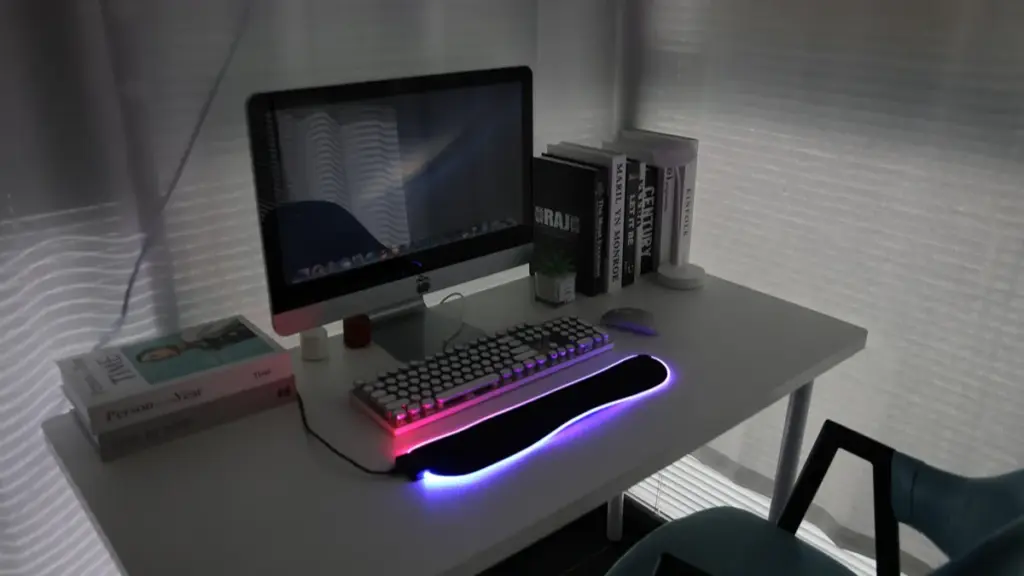
| Feature | Large Mouse Pad | Extended Mouse Pad |
|---|---|---|
| Main Purpose | More mouse movement | Keyboard + mouse coverage |
| Typical Width | 450–500 mm | 800–900+ mm |
| Desk Coverage | Partial | Much larger |
| Low-Sensitivity Gaming | Excellent | Excellent |
| Keyboard Placement | Usually separate | On the same pad |
| Portability | Easier | Less portable |
| Gaming Desk Appearance | Simple | More integrated |
Core Dimensions and Desk Coverage Profile
Selecting the right physical footprint directly impacts how you organize your desktop and manage your physical tracking boundaries. Standard sizing tiers dictate whether your peripheral layout remains modular or completely unified.
- Large Pad Dimensions: Typically measures 450 x 400 mm, focusing exclusively on localized mouse tracking while leaving the keyboard directly on the desk surface.
- Extended Pad Dimensions: Scales up to 800 x 400 mm or 900 x 400 mm, turning your main workspace into a single continuous textile surface.
- Colossal 3XL Dimensions: Expands up to 1200 x 600 mm to provide total desktop coverage for heavy hardware configurations and multi-monitor stands.
Before choosing, measure your physical desk depth and calculate the exact clearance around your monitor legs to prevent your mat from bunching or hanging off the edge.
Aiming Style, DPI Sensitivity, and Tracking Mechanics
Your physical movement patterns and in-game sensitivity settings should dictate your surface area requirements. A mismatch here leads to constant sensor resets or unnecessary wrist strain.
- High DPI Setups (1200+ DPI): Align perfectly with large pads, as players primarily use wrist pivots or hybrid finger movements requiring minimal physical travel.
- Low DPI Setups (400-800 DPI): Optimize performance on extended surfaces, allowing wide, sweeping arm flicks without the risk of hitting the edge of the pad.
- Horizontal Swipe Space: Extended mats minimize the constant lifting and re-centering cycle during fast-paced 180-degree turn maneuvers.
Consistent surface friction across the entire active workspace supports steadier micro-adjustments and predictable tracking, which are critical for competitive first-person shooters.
Ergonomics, Equipment Stability, and Daily Comfort
The relationship between your arms, peripherals, and the desk edge changes significantly when transitioning between these two size classes. Vibration damping and height matching play a silent but major role in physical comfort during long sessions.
- Height Alignment: Extended mats place both the keyboard and mouse on a single height level, eliminating minor wrist angle imbalances.
- Forearm Cushioning: A full-size desk mat pads the forearms against hard desk edges, reducing localized pressure points.
- Anchored Stability: Placing the weight of your keyboard onto an extended pad locks the entire textile surface in place, preventing the mouse tracking area from sliding during rapid swipes.
Large pads counter these benefits by offering much easier cleaning maintenance, faster hand-washing, and simpler repositioning on complex or multi-tier desk layouts.
Setup Mobility, Portability, and Desk Space Constraints
Your playing environment determines whether a massive footprint is an asset or a liability. Portability is highly valued by competitive players who travel frequently.
- Tournament Portability: Large pads roll up compactly, fitting easily into backpacks for LAN events, tournament travel, or shared workspaces.
- Desk Depth Limitations: Extended options require substantial flat surface area and will overhang or buckle on shallow desks under 28 inches deep.
- Accessory Management: Choosing a large pad preserves your raw desk aesthetics and keeps open space clear for external desktop speakers, audio mixers, or heavy dual-monitor clamp mounts.
Scale Your Brand With Premium Hand-Health Solutions

How to Choose the Right Mouse Pad Size for Different Markets
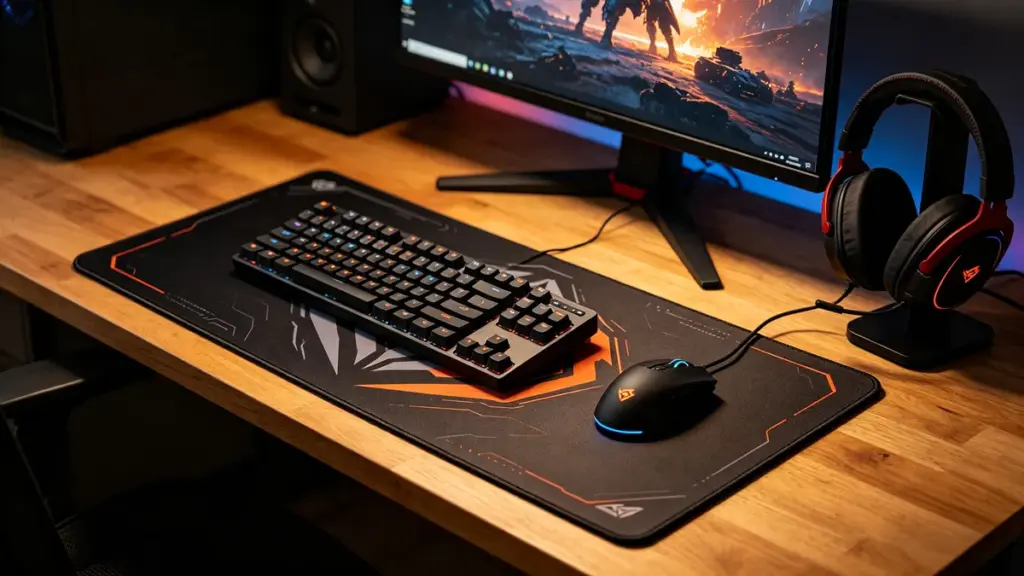
Mouse pad size preferences can vary by market, customer type, and product positioning. A successful OEM product should consider more than simply choosing the largest possible size.
For gaming brands, rivenditori, and distributors, three factors are particularly important: target users, desk setup, and product positioning.
North American and European Gaming Markets
Large and extended formats are strong options for gaming-focused product ranges. Many PC gaming setups use full-size keyboards and dedicated gaming desks, making formats such as 800 × 300 mm and 900 × 400 mm practical.
Premium materials and performance features can also support a higher product position. Options may include natural rubber, PU foam, Poron foam, silicone, leather, or specialized gaming surfaces.
For premium gaming products, thickness and surface consistency are also important. A pad that looks good but has uneven thickness or poor edge finishing can negatively affect the user experience.
Asian Markets
Compact desks and smaller workspaces can make medium-sized products more practical for some customers. However, extended gaming pads are still widely applicable to PC gaming setups.
For price-sensitive markets, manufacturers may focus on standard dimensions, common materials, and simplified customization to control production costs.
E-Commerce and Gaming Brands
For online sellers, product dimensions should also be considered together with packaging and logistics.
A larger mouse pad provides more surface area, but it also affects package size, shipping cost, storage, and fulfillment. Therefore, the best-selling size is not always the physically largest one.
A practical product range could include:
- Medium: for compact gaming and office setups
- Large: for players who need more mouse movement
- 800 × 300 mm: for keyboard and mouse coverage
- 900 × 400 mm: for larger gaming desks
This gives brands enough coverage without creating an unnecessarily large number of SKUs.
Custom Gaming Mouse Pad Sizes for OEM Projects
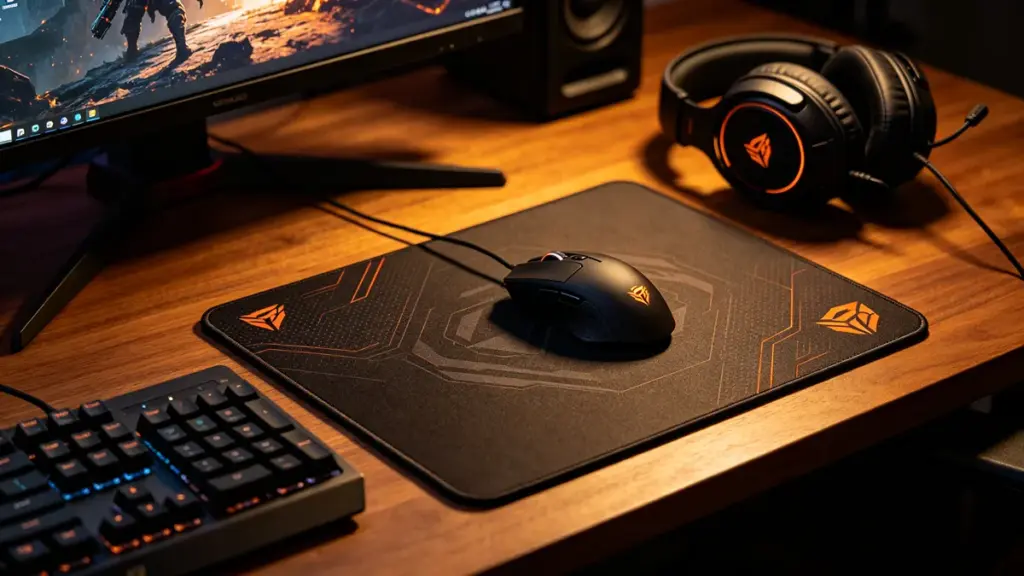
OEM mouse pad dimensions directly dictate unit costs, production scrap rates, and shipping logistics. Selecting the right size class balances gamer performance with manufacturing reality.
Standard sizes are useful for mass-market products, but OEM brands often need something different.
Custom gaming mouse pad sizes can be developed according to a brand’s product concept, target desk size, packaging requirements, or visual design.
Per esempio, a gaming brand may want a wider desk mat to fit a specific keyboard and mouse combination. Another brand may require a special ratio for a limited-edition gaming setup or a product bundle.
Size customization can also be combined with material and surface customization. Depending on the product concept, gaming mouse pads manufacturer like Tecnologia Sanxing may work with:
- Natural rubber
- PU foam
- Silicone or gel
- Poron foam
- Leather or PU leather
- Fabric surfaces
- Aluminum or metal
- Waterproof surface layers
- Custom printed graphics
Per progetti OEM, the dimensions should be confirmed together with thickness, edge construction, surface material, backing material, printing method, and packaging.
Size and Mouse Sensitivity
Mouse sensitivity directly affects the amount of surface area a gamer needs.
Low DPI or low in-game sensitivity generally requires larger physical mouse movements. In this case, a large or extended mouse pad can provide a better experience.
High sensitivity requires less physical movement, so a medium-sized pad may be enough.
Need Custom Gaming Mouse Pad Sizes for Your Brand?
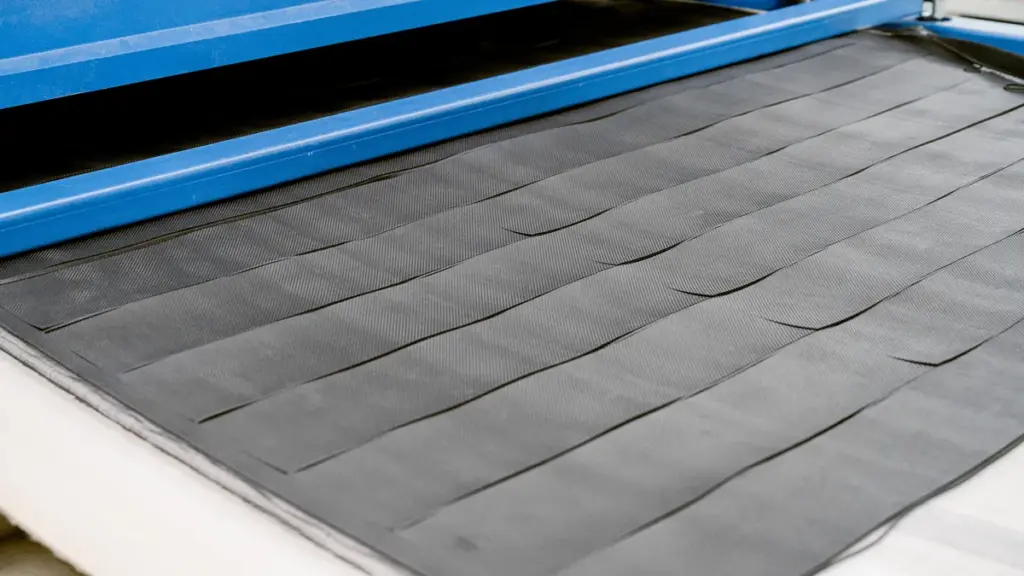
The right size can help your gaming mouse pad stand out while matching your target market, desk setup, and product positioning. Tecnologia Sanxing supports OEM and ODM mouse pads with flexible size and material options, backed by in-house manufacturing capabilities.
Key advantages include:
- 50,000+ m² of production facilities
- 1.5 million pieces/month production capacity
- 800 × 300 mm and 900 × 400 mm standard gaming sizes
- Low MOQ from 50–100 pcs for selected standard specifications
- Custom materials, stampa, spessore, edges, and packaging
- OEM/ODM support from product development to mass production
Looking for a custom gaming mouse pad size for your brand? Contact Sanxing Tech to discuss your specifications and get a tailored OEM solution.
Domande frequenti
What is the standard gaming mouse pad size?
There is no single universal standard. Common gaming mouse pad sizes range from approximately 300 × 250 mm for compact products to 800 × 300 mm and 900 × 400 mm for extended gaming formats. The most suitable size depends on desk space, mouse sensitivity, keyboard size, and intended use.
What size mouse pad do gamers use?
Many PC gamers use large or extended mouse pads. Formats such as 450 × 400 mm, 800 × 300 mm, E 900 × 400 mm are practical choices for gaming setups. Low-sensitivity FPS players often prefer larger surfaces because they need more room for arm movement.
Is a large mouse pad better for gaming?
Yes, a large mouse pad is generally superior for gaming, especially for shooters and competitive titles. It provides a larger, uninterrupted surface area that allows for consistent sensor tracking and eliminates the need to constantly lift and reset your mouse. It also offers ergonomic benefits by cushioning your forearm against the hard edge of your desk during long play sessions.
What size is an XXL mouse pad?
In many gaming product ranges, an XXL mouse pad is around 900 × 400 mm or larger. Some brands use the XXL label for even larger desk mats, so the actual dimensions should always be checked before purchasing or developing a product.
How thick should a gaming mouse pad be?
Common gaming mouse pad thicknesses are around 2–5 mm. A 3 mm thickness provides a good balance between cushioning, stability, and a relatively low profile, making it a practical specification for many gaming products.
Does mouse sensitivity affect mouse pad size?
Yes, mouse sensitivity directly dictates your physical space requirements. Low sensitivity (low DPI) players need large or extended pads to accommodate the long physical arm sweeps required for in-game tracking and 180-degree turns. High sensitivity players utilize shorter, wrist-based movements, meaning they can play comfortably on small or medium pads.
Will an extended mouse pad fit my desk?
An extended pad will fit your desk if the surface dimensions are larger than the pad, leaving at least a 2 to 5 cm safety margin on all sides to prevent overhang. Before purchasing, measure your usable desk space rather than total surface area, taking monitor stands, desk depth, and rear cable clearance into account.